CCN1/CYR61 – The Next Generation Biomarker for Early Cancer Detection
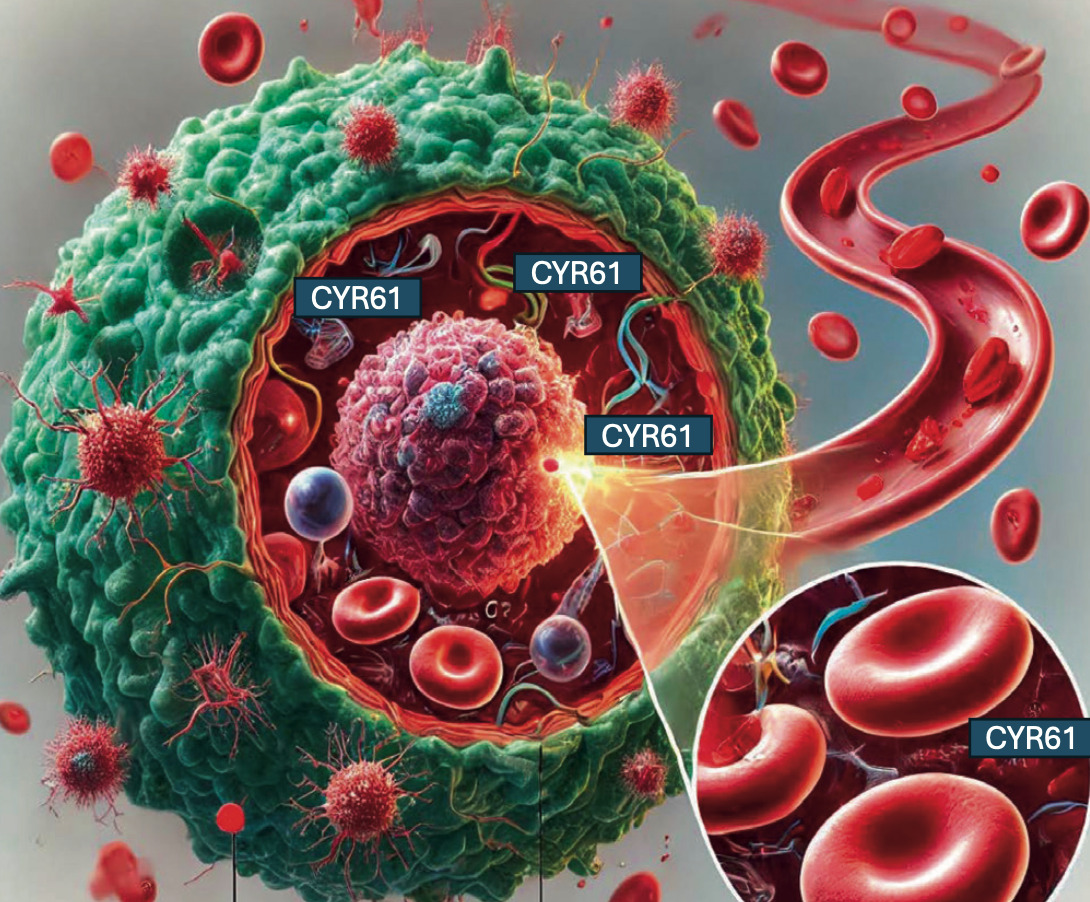
Rethinking cancer screening.CCN1 (formerly called CCN1) enables highly sensitive liquid biopsy-based blood analysis for detecting early-stage cancer (in particular breast cancer).
Confidence through sensitivity. CCN1 shows high accuracy in identifying breast cancer, even in its earliest, most treatable stages. Early intervention drastically improves patient outcomes and expands therapeutic options.
Minimally invasive. Game-changing. – CCN1 allows early cancer detection via a simple blood test. This innovation might be used for interval testing and enables personalization of routine screening procedures (e.g., mammography for breast cancer).
More than detection. CCN1 identifies aggressive tumor dissemination early, giving patients and doctors a critical head start on treatment planning. CCN1 expression levels correlate with tumor aggressiveness, supporting risk assessment and personalized medicine.
Focus on metastasis. CCN1 supports the survival of disseminated tumor cells, making it a valuable marker for assessing metastatic potential of CTCs with important implications for monitoring disease progression and recurrence risk.
Detect early, intervene smart. As a pro-survival factor, CCN1 is not only a diagnostic tool but it might become also a promising target for novel therapeutic strategies blocking metastatic progression.
Not just for breast cancer. CCN1 zeigt auch vielversprechende Ergebnisse bei der Erkennung von Lungenkrebs (NSCLC), asbestbedingten Lungenerkrankungen und Bauchspeicheldrüsenkrebs, was sein Potenzial für die Früherkennung mehrerer Krebsarten (MCED) unterstreicht.
SCIENTIFIC BACKGROUND
CCN1 as a Tumor Biomarker – Functions & Potentials
CCN1/CCN1 (Cysteine-rich angiogenic inducer 61) is a multifunctional extracellular matrix protein overexpressed in various cancers that plays a critical role in tumor biology and offers both diagnostic and therapeutic potential:
- Early Tumor Detection: CCN1 can be detected in the bloodstream at very early stages of cancer. doi: 10.3390/cancers13030563.
- Tumor Cell Survival and Metastasis: As a pro-survival factor, CCN1 supports the survival of circulating tumor cells and subsequent metastasis. doi: 10.1002/1878-0261.12998.
- Promotion of Pro-Metastatic Tumor Microenvironment: CCN1 contributes to the formation of new blood vessels and enhances cellular movement – both essential for tumor growth and metastatic spread. doi: 10.1074/jbc.M113.533042.; doi: 10.1186/s13045-022-01248-w.
- Cross-Tumor Relevance: Beyond breast cancer, CCN1 has shown diagnostic significance in lung cancer doi: 10.1002/1878-0261.13099., ovarian cancer ( doi: 10.1007/s12032-014-0117-2.), prostate cancer, gastric (doi: 10.1002/pros.21501.) cancer, pancreatic cancer (unpublished).
These characteristics position CCN1 as a promising biomarker – valuable for both early cancer detection and assessment of metastatic risk.
OUR STUDIES
- Early Detection of Breast Cancer via CCN1 – A Highly Sensitive Liquid Biopsy Tool
Bartkowiak et al., 2021
DOI: 10.1093/clinchem/hvab153
This study introduces CCN1 as a circulating protein biomarker for the early detection of breast cancer. The marker demonstrates exceptional sensitivity, especially in detecting tumors at a very early stage – outperforming conventional markers like CA 15-3. Detection is achieved through a simple blood draw (liquid biopsy), providing a minimally invasive and highly accessible screening method. CCN1 proves especially valuable for identifying small tumors that are difficult to detect via imaging.
- CCN1 and Metastasis – A Functional Biomarker and Therapeutic Target
Bartkowiak et al., 2021
DOI: 10.3390/cancers13030563
This publication explores CCN1’s biological role as a “pro-survival” factor, supporting the survival of circulating tumor cells and facilitating metastatic spread. The data suggest CCN1 functions not only as a biomarker for metastatic potential but also as a promising therapeutic target to disrupt early metastasis. The combination of diagnostic relevance and functional impact positions CCN1 as a powerful tool in precision oncology.
- CCN1 as multi-cancer early detection (MCED) biomarker
Ackars et al., 2021
DOI: 10.1002/1878-0261.13099
This study investigates the applicability of CCN1 in detecting other tumor types, including non-small cell lung cancer (NSCLC), asbestos-related lung diseases, and pancreatic cancer. Elevated CCN1 levels were found in blood samples of affected patients, sometimes even before clinical symptoms appeared. The findings underline CCN1’s potential as a pan-cancer biomarker with significant implications for early detection across multiple cancer types.
PROSPECTS
The future of cancer care starts in the blood – CCN1 elevates liquid biopsy to a new standard.
It paves the way for fast, accessible, and personalized cancer diagnostics.
The research results obtained so far with CCN1 as a circulating tumor marker are promising.
We are convinced that CCN1 has great potential to contribute to the success of liquid biopsy as new diagnostic strategy in oncology.
We welcome collaborations with research institutions, clinics, diagnostic companies and funding partners for further clinical validation or the development of high throughput test systems.
Let’s work together to advance CCN1 and make it an integral part of modern, personalized cancer therapy.
Contact
Institut für Tumorbiologie, UKE Prof Dr. med. Klaus Pantel pantel@uke.de